Services
Four traditional disciplines. Practised properly.
Every wall is different and every repair is matched to it. Below is the work we do most often — but if you have something unusual, ask.
01
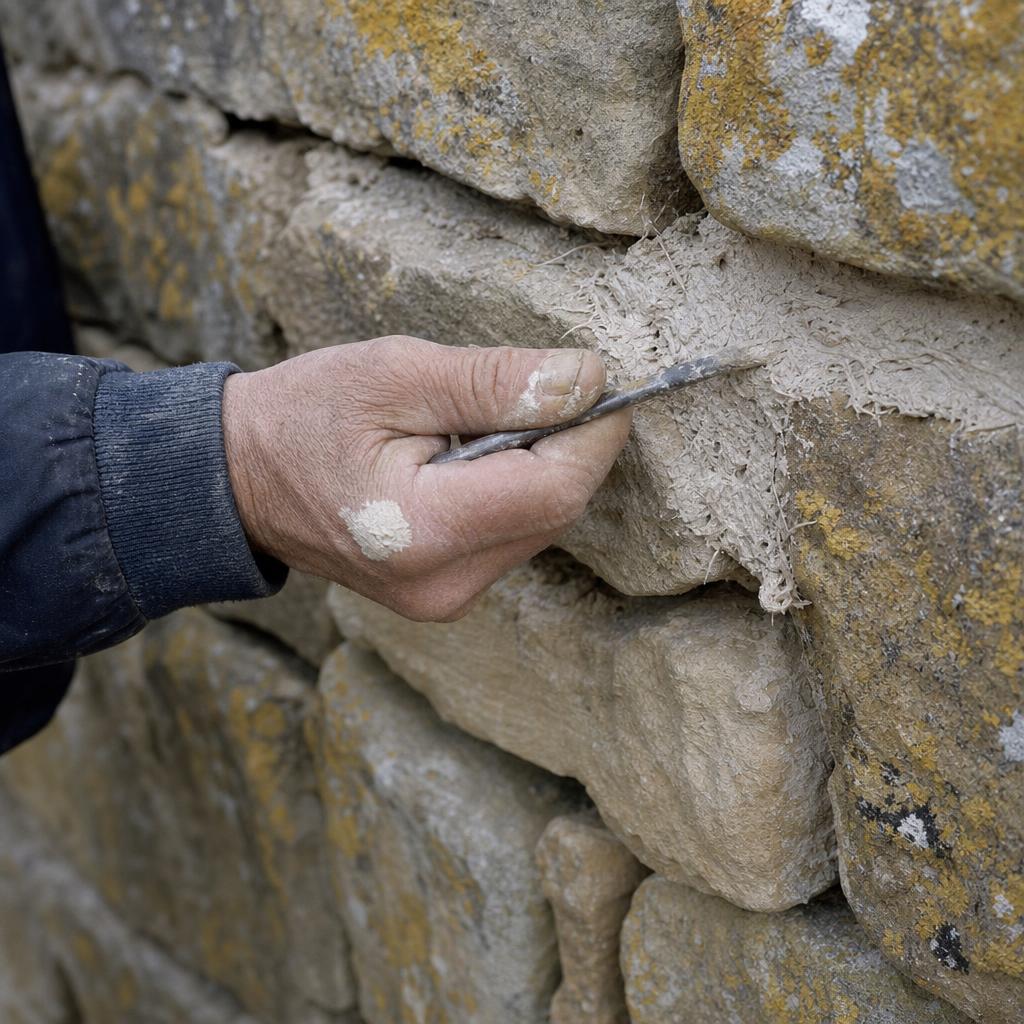
Lime Pointing & Mortar Repair
The single biggest threat to a historic wall is cement pointing.
Cement is hard, brittle and impermeable. Used on soft historic stone or brick, it traps moisture against the building, causes the masonry face to spall in frost, and accelerates decay at every joint.
We work exclusively in breathable lime — hot-mixed quicklime for the softest historic fabric, natural hydraulic limes (NHL 2 or 3.5) where greater initial set is needed. Every mix is matched to the wall in front of us: aggregate, colour, hydraulicity, joint profile.
- —Hot-mixed lime mortars made on site
- —Removal of failed cement pointing by hand
- —Joint profiling matched to surviving original work
- —Limewash and shelter-coat finishes
02
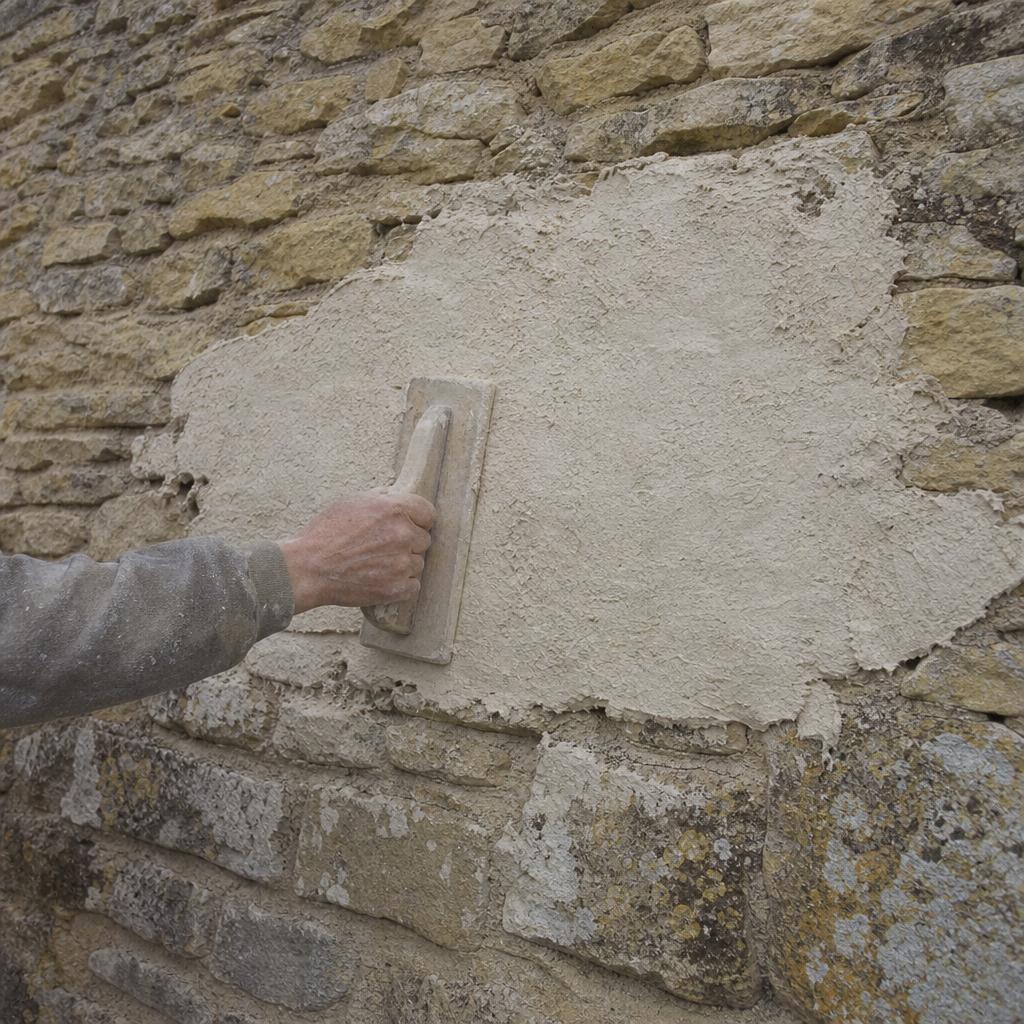
Lime Rendering
Breathable lime renders that protect soft masonry while letting walls dry.
We specify and apply hot-lime and natural hydraulic lime renders to stone, brick and cob. Haired scratch and float coats are built up by hand and finished to suit the building — bagged, wood-floated or roughcast.
Cement renders trap moisture and quietly destroy the wall behind them. A well-mixed lime render moves with the building, sheds water and weathers in honestly over decades.
- —Hot-lime and NHL render systems
- —Haired base and float coats
- —Traditional finishes: floated, bagged, roughcast
- —Limewash and mineral paint finishes
03
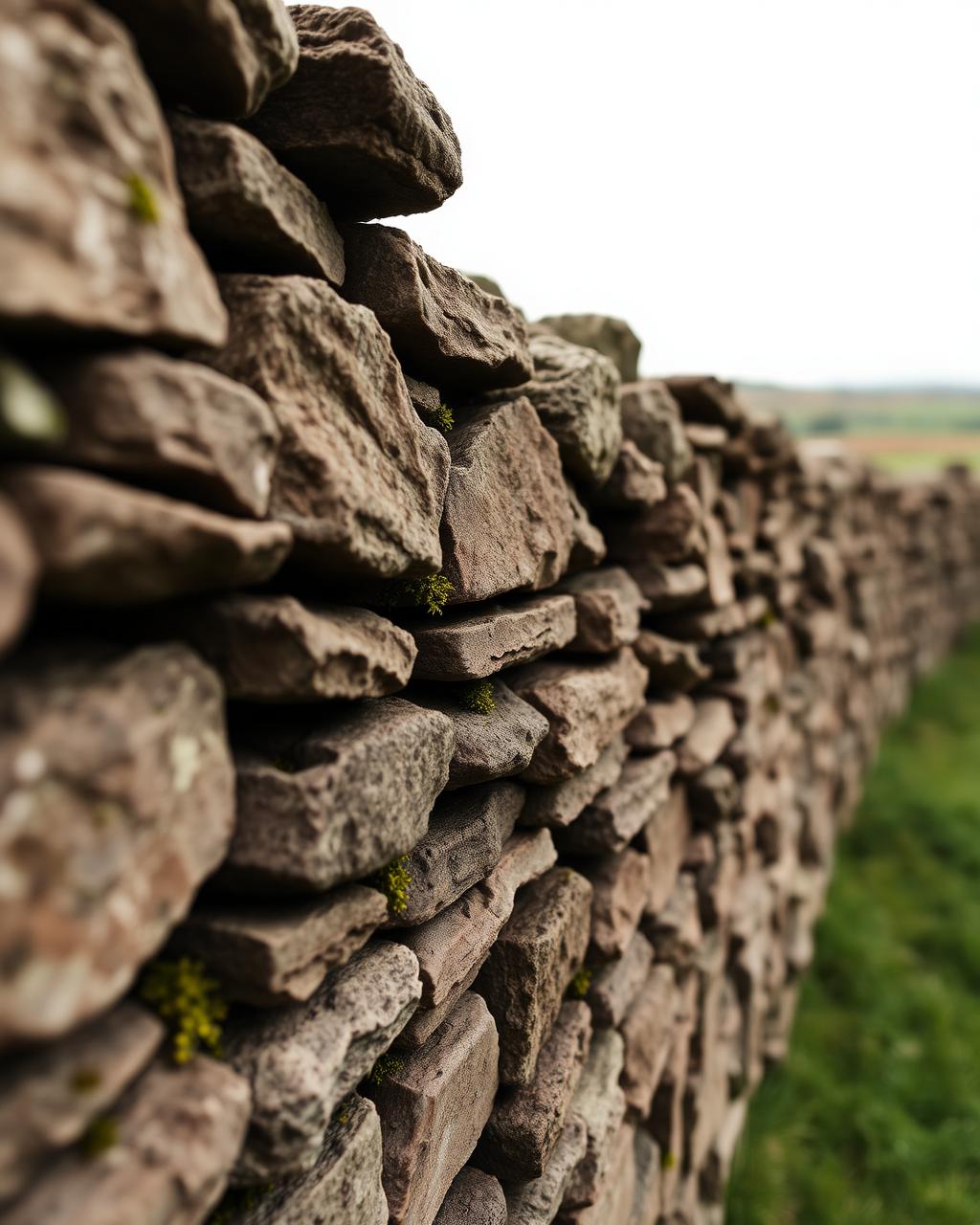
Stone Wall Building
Structural geometry. No mortar — and none needed for the next two centuries.
A well-built dry-stone wall is a piece of working architecture: a double-skin structure of carefully placed stones, locked by gravity, pinned with smaller fillers, tied through with throughs and crowned with coping.
We rebuild and repair field walls, retaining walls, garden walls and churchyard boundaries, sourcing matching stone from local quarries where original material has been lost.
- —Full rebuilds and short gap repairs
- —Retaining walls, ha-has and revetments
- —Coping reinstatement (cock-and-hen, flat, buck-and-doe)
- —Sympathetic stone sourcing
04
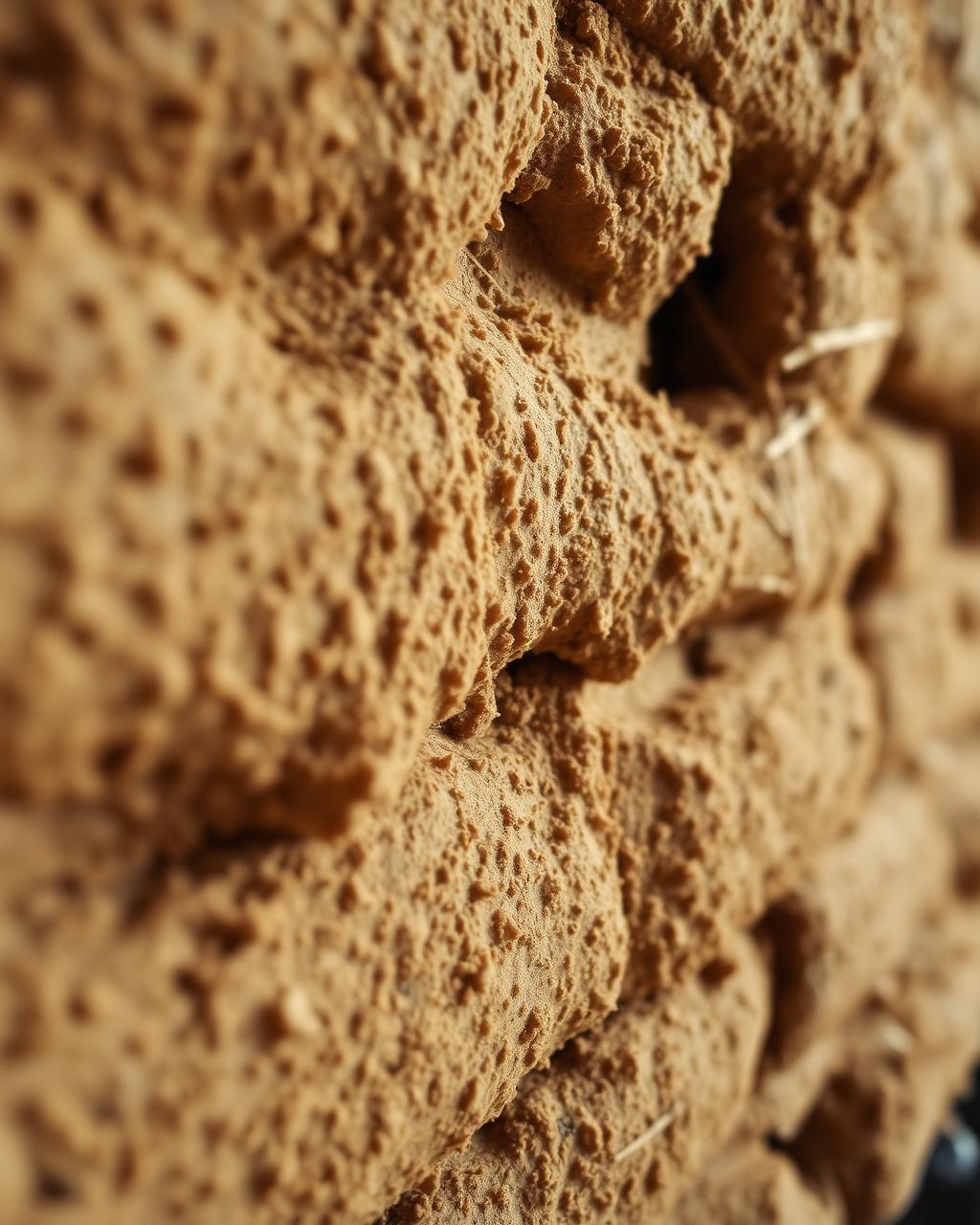
Cob & Earth Walls
An English vernacular technique that outlasts almost everything built since.
Cob is a mix of subsoil, straw and water, raised in lifts. Repaired with sympathy it will last indefinitely; sealed with cement render it begins to fail almost immediately.
We dry walls slowly under breathable wraps before any work begins, rebuild lost sections in new cob matched to the original soil, and finish in lime plasters or limewash.
- —Removal of cementitious renders
- —Sectional cob rebuilding in lifts
- —Cob block repair for smaller patches
- —Breathable lime plasters and renders
05
Listed Building Repairs
Conservation-grade work to Grade I and Grade II listed buildings.
Most of our work is on listed buildings. We provide method statements, mortar specifications and sample panels suitable for listed building consent applications.
We work alongside conservation officers, SPAB-trained surveyors and historic-buildings architects across Somerset and the South West.
- —Method statements for listed building consent
- —Sample panels and mortar analysis
- —Whole-building conservation programmes
- —Photographic records and handover notes
06
Lime Pointing — Wellington
Hot-mixed lime for the soft red sandstone cottages of west Somerset.
Wellington, Rockwell Green, Sampford Arundel, Wiveliscombe and the western Blackdowns sit on soft red sandstone that needs particularly soft, breathable lime mortars.
A short drive from our Taunton base — most local jobs can be visited at short notice.
- —Soft hot-mixed mortars for red sandstone
- —Cement removal by hand
- —Listed building consent support
- —Limewash and shelter-coat finishes