Service · Listed buildings, Somerset
Listed building repairs in Somerset — done to the standard the building deserves.
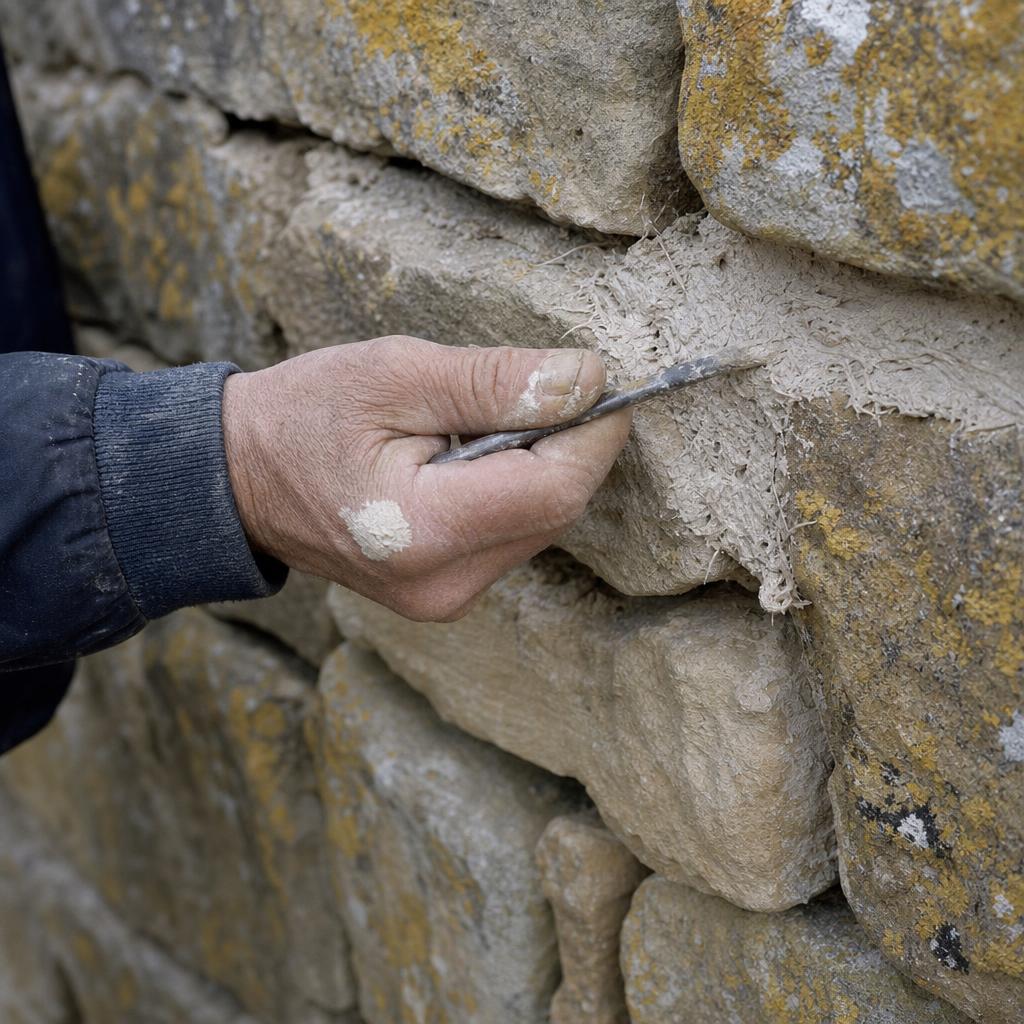
Most of our work is on listed buildings. Across Taunton, Somerset and the South West we repair Grade I and Grade II buildings — cottages, farmhouses, manor houses, churches, churchyard walls, barns and outbuildings — using the breathable, traditional materials they were first built with. No cement, no gypsum, no acrylic polymers, no disc-cutters near original fabric.
We have been working to listed-building specifications since 1998 and are comfortable at every stage of a project: pre-application discussions with conservation officers, sample panels and material approval, full method statements, photographic records of existing condition, and detailed handover notes. We work alongside SPAB-trained surveyors, historic-buildings architects and heritage consultants throughout Somerset and the wider South West.
What we do on listed buildings
- Hot-mixed lime repointing and removal of failed cement
- Lime rendering, lime plastering and limewash finishes
- Cob and earth wall repair and rebuilding
- Stone wall rebuilds and gap repairs to listed boundaries
- Method statements and material specifications for listed building consent
- Sample panels and mortar analysis
Working with conservation officers
On almost every listed-building job there is a conservation officer to satisfy. We make their job as easy as possible: clear method statements, named materials, a sample panel left up for two to four weeks for inspection before bulk work begins, and a final photographic record. The result is a smoother consent process and a building that is genuinely better cared for.
Where we work
Across Somerset — Taunton, Wellington, Wiveliscombe, Bridgwater, Glastonbury, Frome, Bruton, Yeovil — and into Devon, Dorset, Wiltshire and Herefordshire for larger or specialist projects. See our full areas we cover page.
Common questions
Do I need listed building consent for repointing or rendering?
Usually yes. Most repointing, render replacement and external repair work to a listed building requires listed building consent from the local planning authority, even if the work is like-for-like. We provide method statements and material specifications to support your application.
What does 'conservation-grade' actually mean in practice?
It means using materials and methods compatible with the original construction: breathable lime mortars rather than cement, hand tools rather than disc cutters near historic fabric, sample panels agreed with the conservation officer before bulk work, and detailed photographic records throughout. We treat the building as the primary document.
Do you work with conservation officers, architects and surveyors?
Yes — this is a normal part of every listed-building job. We work to specifications written by SPAB-trained surveyors and historic-buildings architects, and we are happy to attend pre-application meetings with conservation officers.
Can you help with a Listed Building Heritage Statement?
We can provide the technical sections — existing-condition photographs, mortar analysis, proposed materials and methods. A full Heritage Statement is normally written by a heritage consultant or architect; we are happy to recommend trusted local people.
How long do conservation projects usually take?
A whole-elevation repointing on a Grade II cottage is typically 4–8 weeks on site. A larger render strip-and-rebuild may be 8–16 weeks. Lime work is seasonal — most listed-building jobs run between April and October.
Related work
Other things we do nearby
Lime Pointing
Hot-mixed lime mortar repointing — the core of most listed-building work.
Read more →Lime Rendering
Breathable lime renders for listed cob and stone walls.
Read more →Cob Repair
Earth wall repair on listed cottages and farm buildings.
Read more →Stone Wall Building
Hand-built stone walls to listed-curtilage and churchyard boundaries.
Read more →
Listed building needing work? Send us the listing description and a few photographs.
Request a survey